
Home Loans in South Fulton, Explained Line by Line
We arrange home purchase loans, refinancing, VA, FHA and USDA loans, plus home equity loans, HELOCs and investment property financing for borrowers in South Fulton, Union City and East Point. A loan officer tells you what you qualify for, what sets your rate and what closing will cost before you apply.
- Free mortgage consultation
- Scheduled loan officer callbacks
- Every fee explained
- Office, phone or video
Home Loans for Buying, Refinancing and Borrowing Against Equity
Most people come to us for one of three reasons: to buy a property, to lower or restructure an existing mortgage, or to turn equity into cash. Buyers can choose from conventional and jumbo loans, FHA loans, VA loans, USDA loans and first-time homebuyer loans. Current owners can look at mortgage refinance, cash-out refinance, home equity loans and HELOCs, and borrowers age 62 or older can ask about reverse mortgages. If you own rentals or work for yourself, DSCR loans for investment property and non-QM loans let you qualify using rental income or bank statements rather than tax returns.

Cash-Out Refinance
Replace your current mortgage with a larger one and take the difference in cash, with clear math on equity limits, the new rate and closing costs.
Home Purchase Loans
Purchase financing from pre-approval to closing, with the loan programs, down payment and monthly payment laid out before you make an offer.
VA Loans
Zero-down VA purchase and refinance loans for eligible veterans, service members and surviving spouses, with the funding fee and entitlement explained up front.
FHA Loans
Lower down payment, more flexible credit rules and mortgage insurance you should understand before you sign. We walk through all of it.
Non-QM Loans
Mortgage options for borrowers whose income or credit history doesn't fit agency rules, using bank statements, assets or 1099s to qualify.
Mortgage Refinance
Replace your current mortgage with a lower rate, a shorter term or a fixed payment, with the break-even math shown before you decide.
First-Time Homebuyer Loans
FHA, VA, USDA and low-down-payment conventional loans for first-time buyers, with a documented pre-approval and a clear cash-to-close estimate.
Reverse Mortgages
For borrowers 62 and older: turn equity into cash, monthly payments or a growing credit line with no monthly mortgage payment required.
USDA Loans
Zero-down USDA guaranteed home loans, starting with an address check and an income test so you know if the program fits before you make an offer.
Home Equity Loans & HELOCs
Borrow against your equity with a fixed-rate loan or a flexible line of credit while your first mortgage and its rate stay in place.
Conventional & Jumbo Loans
Compare conforming and jumbo mortgages side by side, including down payment, private mortgage insurance and how your credit score moves the rate.
Investment & DSCR Loans
Financing for rentals and investment purchases, including DSCR loans that qualify on the property's rent instead of your personal income documents.
Why Borrowers Work With Us
A mortgage has a lot of moving parts, and most of the confusion comes from nobody explaining them. We explain them.
- 01
We tell you why, not just what
If your rate comes back higher than you expected, we show you the cause: a credit score just under a pricing tier, a loan-to-value above 80 percent, or a cash-out adjustment. Then we tell you what would change it and whether that change is worth making.
- 02
Your Loan Estimate, read with you
Every application produces a federal Loan Estimate. We go through it section by section, including origination charges, discount points, title fees and the escrow deposit, so you know which costs are ours, which belong to third parties and which you can shop.
- 03
An honest answer on loan type
FHA is not always cheaper than conventional, and a refinance does not always pay off. We compare the options side by side, including monthly mortgage insurance and the break-even month, and say plainly when the answer is to wait.
- 04
One loan officer from start to closing
The person on your free consultation call is the person who tracks your file through underwriting and appraisal. You are not passed between departments, and you get updates when a condition is cleared or a document is needed.

About Home Loans South Fulton
Home Loans South Fulton is a mortgage office serving buyers, refinancers, veterans, retirees and investors in South Fulton and the cities around it. You can sit down with us at our office, or we can talk by phone or video if that suits your schedule better.
We work a simple way. We answer the question you asked, explain the reason behind the answer and put your options next to each other with their real costs. If a loan does not make financial sense for you, we tell you before you pay for an appraisal.
Where We Arrange Home Loans
We work with borrowers across South Fulton and the nearby cities of Union City, Fairburn, Palmetto, East Point, College Park and Riverdale. Clients also come to us from Douglasville, Lithia Springs, Mableton and Forest Park. Because consultations run by phone and video as well as at our office, distance is rarely an issue anywhere in the area.
- South Fulton
- Union City
- Douglasville
- East Point
- Fairburn
- College Park
- Palmetto
- Mableton
- Forest Park
- Lithia Springs
- Riverdale
USDA eligibility depends on the exact property address, and some areas near the city qualify while others do not. We check any address you are considering during your free consultation.
What Moves Your Rate and Closing Costs
Lenders price risk, so two borrowers asking for the same loan amount rarely get the same quote. Below are the inputs that shift the numbers most, listed roughly from biggest effect to smallest.
Our figures come from your real credit, income and property, not a teaser rate. Your official Loan Estimate arrives within three business days of a completed application, and we go through it with you line by line.
- Credit score
- Pricing is set in score bands, not on a smooth curve. On the same conventional loan, a 739 score can cost more than a 740, which is why a small credit fix before you apply is sometimes worth the wait.
- Down payment and loan-to-value
- The less equity you start with, the more risk the lender carries. A conventional borrower who puts down under 20 percent pays private mortgage insurance, and that charge stays on the loan until the balance drops far enough against the property value to cancel it.
- Loan program
- FHA loans charge mortgage insurance twice: once upfront and again every year. VA loans carry a funding fee, though some disabled veterans do not pay it. USDA loans add a guarantee fee. Each one changes the long-run cost in its own way.
- Debt-to-income ratio
- Lenders divide your monthly debt payments by your gross monthly income. That figure caps the loan amount and can rule programs in or out, so clearing a small car or card balance first can open a better option.
- Points and rate lock
- Discount points are cash paid at closing to buy a lower rate. A longer lock shields you from market swings but may be priced slightly higher than a short one.
- Occupancy and property type
- A loan on the place you will live in prices better than one on a second home or rental. Condos, two-to-four unit buildings and cash-out transactions each carry their own pricing adjustment.
Home Loan Questions We Hear Most
Something not covered here? (404) 671-4981
How much money should I plan to put down?
That answer changes from one loan program to the next. Eligible borrowers can use VA and USDA loans with nothing down, FHA allows 3.5 percent with a qualifying credit score, and certain conventional loans start at 3 percent. A smaller down payment usually brings mortgage insurance, so we show you the monthly payment at a few different amounts.
What credit score do I need for a mortgage?
There is no single cutoff. FHA tends to be the most flexible on score, while conventional pricing improves noticeably at higher score bands. On your consultation we look at your actual credit report, tell you where you land and say plainly if a short wait would save you money.
What is the difference between pre-qualification and pre-approval?
A pre-qualification uses the figures you give us without checking them. A pre-approval comes after we pull credit and verify your income and assets, so the letter shows a seller that your financing has actually been reviewed. Get pre-approved before you start making offers.
Does refinancing make sense for me right now?
We calculate your break-even point: total closing costs divided by your monthly savings. If you plan to keep the loan well past that month, a refinance may pay off. If not, we tell you, and we also check if a HELOC or cash-out refinance fits your goal better.
What closing costs should I expect?
Closing costs include lender fees, appraisal, title insurance, the closing attorney, recording fees and prepaid items like property taxes and hazard insurance for escrow. Your Loan Estimate lists each one. Some can be covered by seller credits or a slightly higher rate, and we explain the trade-off.
How long does it take to close?
The timeline depends on how quickly documents come in, the appraisal schedule and any underwriting conditions. Having pay stubs, bank statements and tax returns ready at the start is the biggest thing you can do to keep it moving. We give you a realistic timeline once your file is submitted.
Is the consultation really free?
Yes. Our mortgage consultations are free, and there is no obligation to apply afterward. You get a scheduled callback with a loan officer, straight answers about your options and a clear idea of the next step.
How a Loan Runs, From First Call to Closing
Most files move through the same five stages. Knowing them ahead of time takes a lot of the stress out of the wait.
- 1
Free consultation
We schedule a callback with a loan officer. You describe your goal, rough income, debts and savings, and we tell you which loan types make sense and which do not.
- 2
Documents and pre-approval
Expect to send recent pay stubs, your W-2s or full tax returns if you are self-employed, and bank statements, plus authorization for a credit pull. After we verify them, you receive a pre-approval letter that sellers and agents take seriously.
- 3
Locking in your terms
When a purchase contract is signed, or when you settle on a refinance, we issue your Loan Estimate and set the rate lock at the point you choose. We explain how long the lock lasts and what it means if the closing date moves.
- 4
Underwriting and appraisal
An underwriter reviews the file and may issue conditions, such as a letter explaining a large deposit. The appraiser confirms the property value supports the loan amount.
- 5
Closing
You receive the Closing Disclosure at least three business days before signing, and we compare it against your Loan Estimate with you. In Georgia a closing attorney conducts the signing, then funds are disbursed.
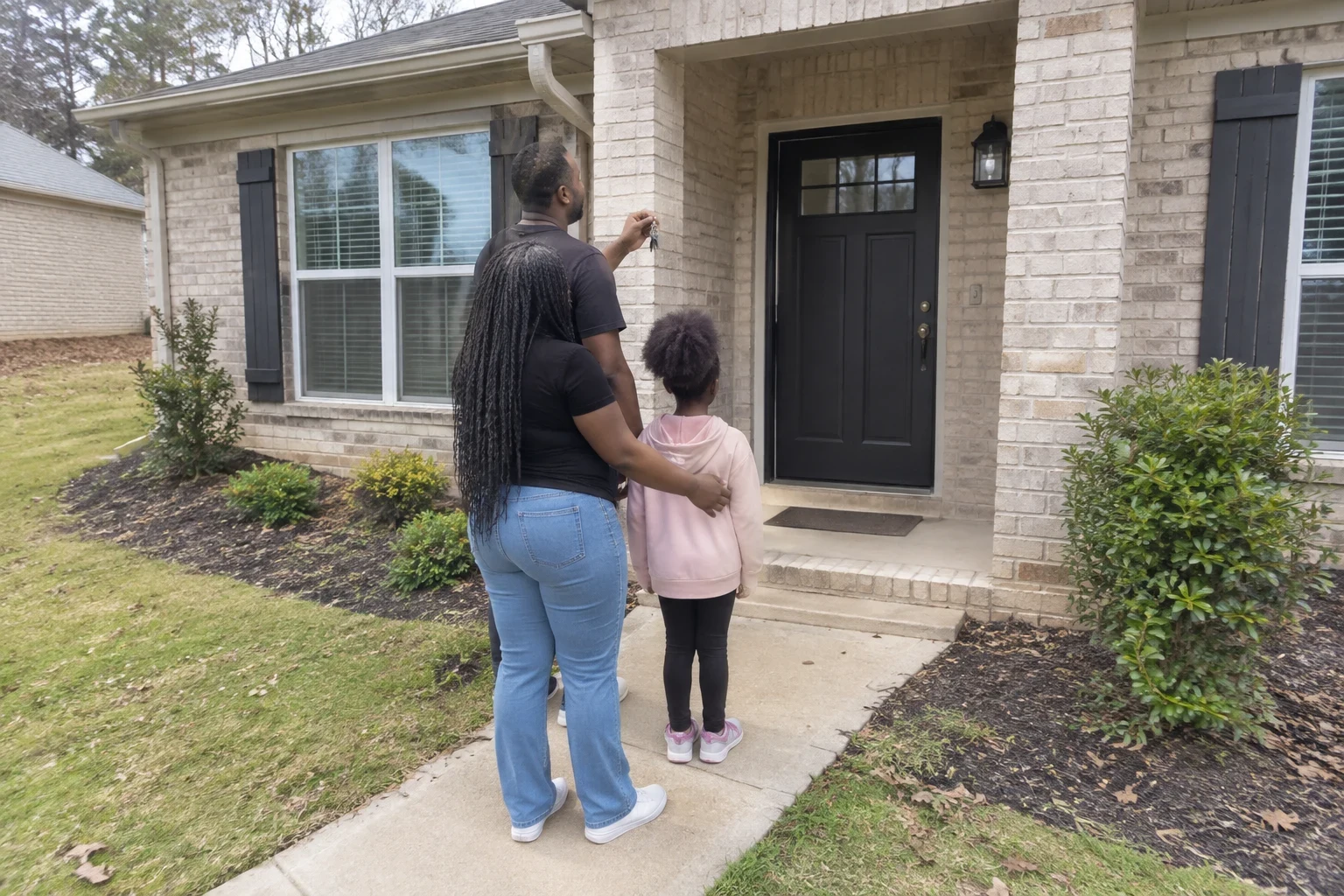
Get Straight Answers on Your Mortgage
Tell us what you have in mind: buying, refinancing or tapping equity. A loan officer will lay out your options and what each one really costs, and the consultation is free.